
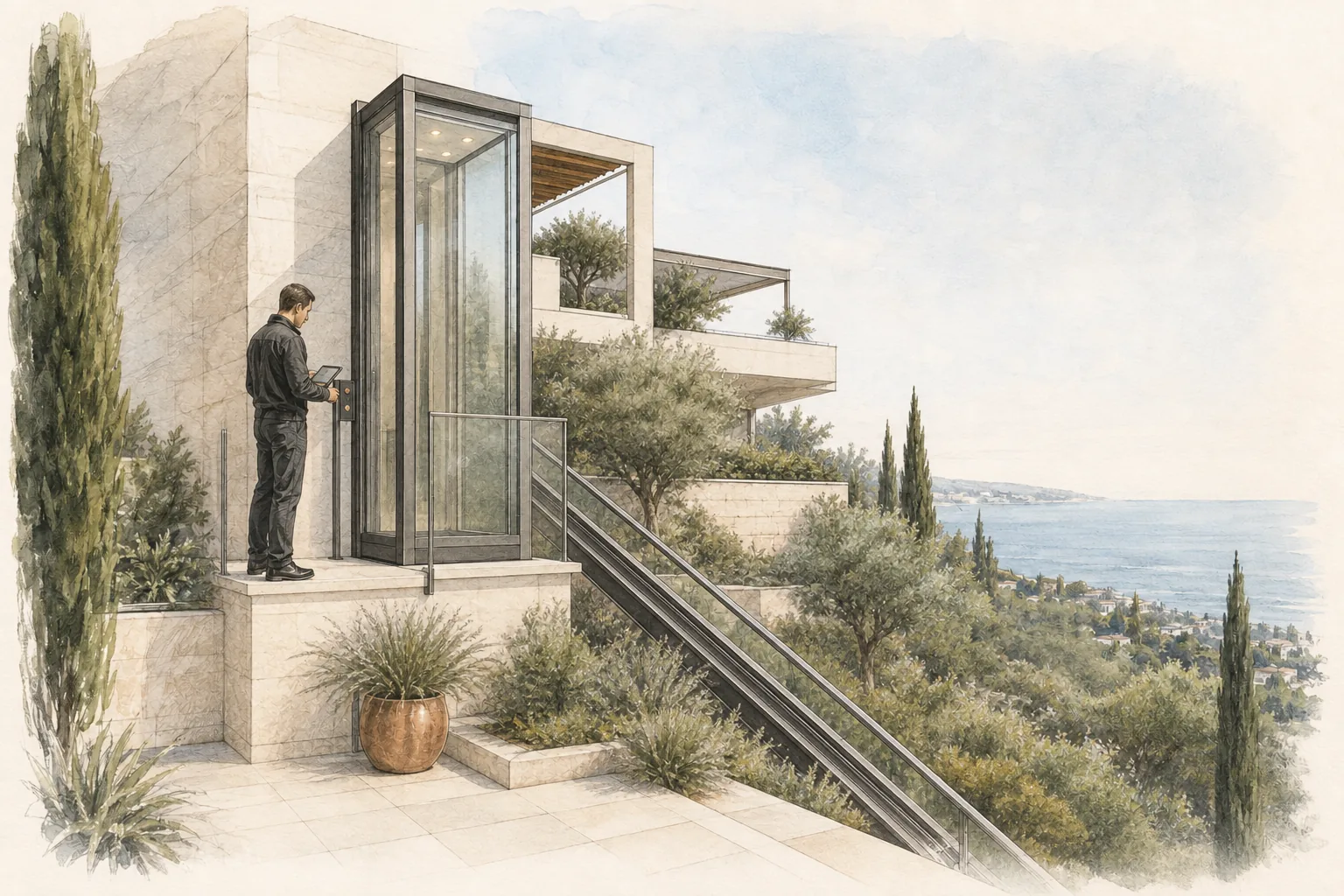
Outdoor installations live with the site
Rain, dust, salt, leaves, heat, frost and vegetation affect the surroundings of an inclined lift. This does not mean the owner performs technical work. It means the route and stations need normal site care in addition to specialist inspection and maintenance.
The exact technical programme depends on the installed equipment, applicable requirements and maintenance agreement. Generic intervals on a blog should not replace the documents provided for the project.
Keep drainage and thresholds clear
Water should leave station roofs, thresholds and surrounding surfaces as designed. Leaves or landscaping debris can obstruct outlets and create standing water. Routine visual attention by the property team helps identify changes before they damage finishes or access.
Any recurring water path should be reported rather than covered with an improvised detail. It may concern the wider building or landscape drainage and require coordination with another contractor.
Control vegetation without hiding technical access
Planting can integrate the track beautifully, but branches and roots grow. The maintained landscape should respect defined clearances and allow technicians to reach inspection points and stations.
New fences, storage or garden structures should not be installed across access routes. When landscaping changes, the effect on visibility, drainage and maintenance should be checked.
Observe doors, lighting and surrounding paths
Users can report unusual noise, damage, poor lighting or a change at a threshold without attempting a repair. Clear contact instructions help the operator respond appropriately and avoid continued use when professional advice is required.
Paths and station approaches belong to the journey. Loose paving, slippery surfaces or a damaged balustrade may sit outside the machine package but still affect safe and confident use.
Provide safe access for specialists
Technical work requires access planned into the architecture. Locked gates, dense planting and finished rooms should not force improvised entry. The owner should know how technicians are admitted and which areas must be clear.
For shared or public sites, this process also includes communication with residents or users and management of temporary closure. It is an operational responsibility, not only a maintenance contractor issue.
Keep the project record current
Handover information, contracts, intervention reports and relevant changes should remain available to the owner or operator. If responsibility changes, the next person needs more than a telephone number and a verbal explanation.
Documented maintenance supports the full project life. It also helps future designers understand the inclined installation before altering nearby terraces, façades, services or landscape.
Define the operator and maintenance contact
A private owner may manage access directly, while a condominium appoints a managing agent and a public site has an operating team. The handover should identify who receives reports, authorises access and communicates any closure. This prevents a minor observation from circulating without a responsible response.
The technical maintenance contact and the person caring for the surrounding property have different roles. Gardeners or cleaners can report visible issues and keep agreed areas clear, but they should not alter or repair the installation. Specialist work follows the project documentation and maintenance arrangement.
Establish a routine visual observation process
Users are often the first to notice a change in sound, lighting, door movement or the station surroundings. A simple reporting process records when and where the change occurred without asking the user to diagnose it. Photographs can help the responsible contact communicate with the specialist.
If operation appears abnormal, the applicable instructions determine the correct response. Continuing to use or attempting to reset unfamiliar equipment can make a situation worse. The project-specific information takes priority over generic online advice.
Care for finishes in the actual environment
Glazing and metal surfaces accumulate salt, dust, pollen and water marks at different rates. Cleaning methods should be compatible with the supplied finishes and avoid contaminating moving areas or drainage. An aggressive product that makes one surface shine can damage another material or seal.
The owner should follow the information provided for the project and ask before introducing a new treatment. Coastal and mountain properties may need different routines, and areas that are difficult to access should be planned for safe professional cleaning rather than improvised from the track.
Inspect the landscape relationship over time
Trees grow, retaining walls move and garden drainage changes. A new irrigation line or terrace alteration can introduce water near foundations. The owner should consider the inclined route when commissioning landscape work and share relevant drawings with the designer or contractor.
Vegetation should be pruned to preserve the defined envelope and technical access. This does not mean creating a bare corridor. A mature landscape can integrate the installation beautifully when plant selection and maintenance zones were considered from the start.
Plan access before booking technical work
Technicians may require parking, keys, gate codes and a clear route to stations or track areas. On a steep property, tools and replacement parts can be difficult to carry if access has changed. The operator should confirm practical conditions when arranging a visit.
Shared and public sites may need temporary barriers and user information. The operating team coordinates these measures so that the specialist can work safely and users understand the closure. Good preparation reduces time on site and avoids cancelling an intervention because the relevant area cannot be reached.
Manage changes and repairs through documented decisions
A damaged surrounding finish, leaking roof edge or altered threshold may sit at the boundary between building work and the inclined installation. The responsible parties should agree the cause and repair method before one contractor changes another's interface. Updated photographs and drawings help preserve the original intent.
Where the installation itself requires technical repair, only competent authorised work should be undertaken. Replacement choices and adjustments are recorded so that the project history remains complete for later maintenance.
Review the maintenance organisation when ownership changes
Sale of a villa, change of condominium manager or new public operator can interrupt knowledge. Contracts, manuals, contacts, access information and intervention records should transfer through a deliberate handover. The new responsible person should know which surrounding care is expected and which work requires a specialist.
This review is also an opportunity to check whether the landscape or building has changed since installation. Any conflict can be discussed before it affects access or operation. A well-maintained record protects both the physical equipment and the value of the route it provides.
Distinguish planned work from reactive intervention
Planned maintenance follows the installed system and agreed programme. Reactive intervention responds to a reported fault, impact, unusual condition or damage. The operator should know how to request each type and what information to provide, including recent changes to the site or access.
Combining all visits under the word maintenance can obscure urgency and responsibility. Clear records show which preventive work was completed and which issue required a separate repair or building response.
Monitor station roofs and building interfaces
A station roof or façade connection may be maintained by a building contractor rather than the inclined-lift specialist. Signs of water entry, damaged sealant or altered drainage should be directed to the correct party, with coordination where the interface touches the installation.
The original drawings help determine that boundary. Without them, one contractor may cover a symptom in a way that obstructs doors, ventilation or inspection. Documentation prevents repairs from creating a new problem.
Keep shared users informed without technical speculation
In a condominium, hotel or public site, users need clear information when the route is unavailable and when service resumes. They do not need unverified diagnoses. A designated operator communicates the practical status while the technical contact investigates.
This separation supports trust and avoids promises about return to service before the relevant work is known. Alternative routes and assistance can be communicated according to the site's operating plan.
Use maintenance experience to improve the surrounding site
Repeated debris, water or access difficulties may indicate that the landscape or building detail needs improvement. The operator can review patterns with the relevant designers instead of treating every occurrence as an isolated cleaning issue.
Changes are assessed before implementation so that they preserve clearances and interfaces. Maintenance records become useful design feedback and support a more durable relationship between the installation and its setting.
Build maintenance into the ownership experience
Owners are more likely to manage the installation well when information is concise, contacts are current and access is convenient. A project file can separate everyday observations, surrounding site care, planned specialist visits and the response to a fault. This avoids both neglect and unnecessary intervention by unqualified people.
For a luxury villa, hotel, condominium or public site, good maintenance organisation should feel as deliberate as the architecture. It protects availability, finishes and the confidence of users. The process begins during design, when stations, planting and technical routes can still be arranged intelligently. A short annual management review can confirm that contacts, access routes, contracts and site responsibilities still match the property as it exists, especially after landscaping, staffing or ownership changes. The review can also record recurring observations and decide whether a building, drainage or landscape specialist should investigate an issue beyond routine maintenance.