
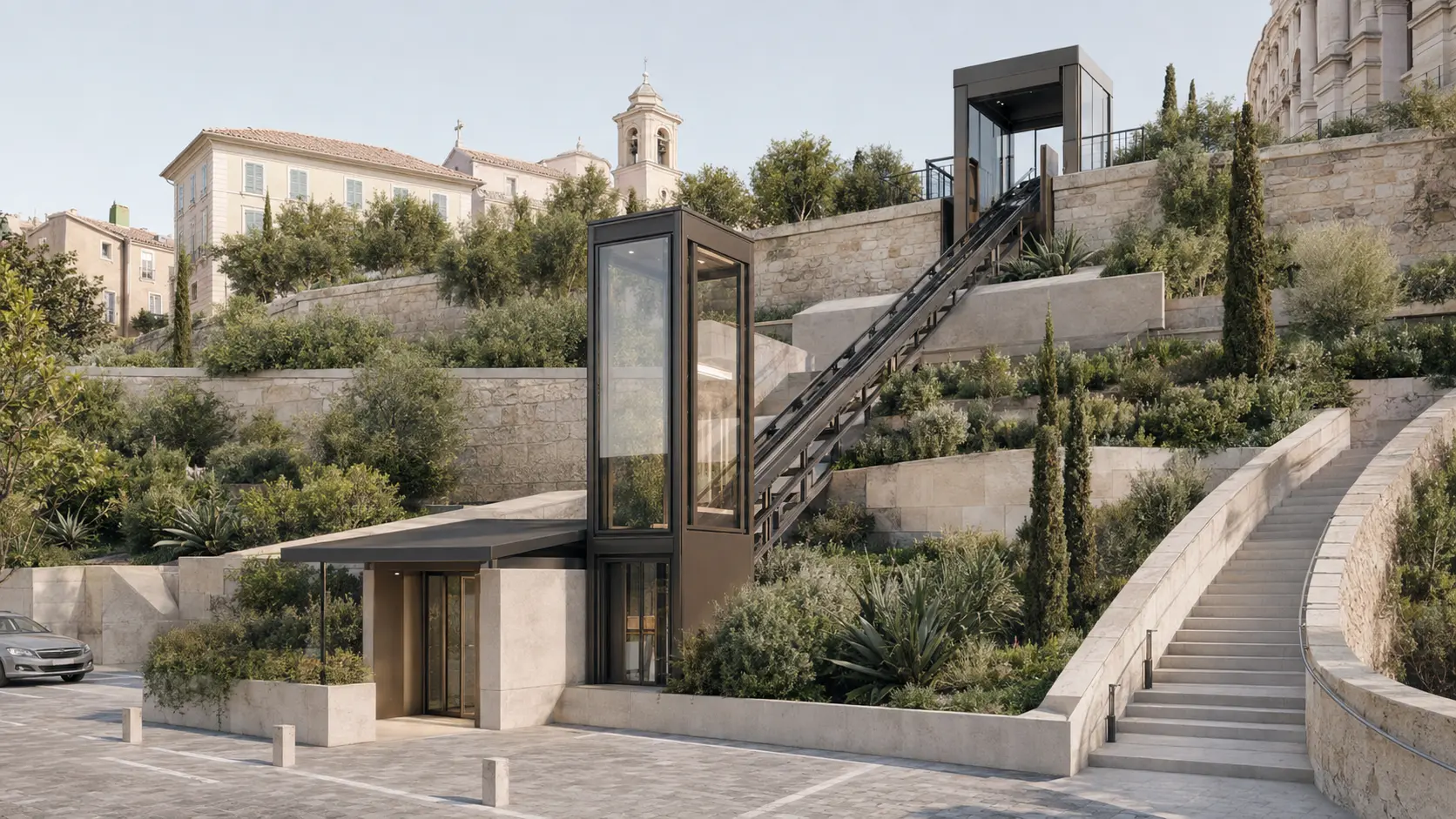
Inclined mobility for public hillside sites
A connection between a car park, village centre or public facility is more than a cabin on a slope. It is a service used by different people and operated over time. Its public route and management requirements belong in the brief from the beginning.
Clear first briefDescribe the real journey and users.
Progressive decisionsSeparate assumptions from verified information.
Complete routeStations and surroundings count as much as the cabin.
Describe the public journey and its role
Passenger numbers, peak periods, nearby facilities and alternative routes help define the service. A short connection may transform access to a historic centre, while a longer route may link a remote parking area. The project team needs to understand how the inclined link fits the wider pedestrian network.
The brief should also state the expected opening conditions and users who may require assistance. These points influence stations, surroundings, information and operating procedures. They cannot be inferred from the gradient alone.
Build a shared technical picture
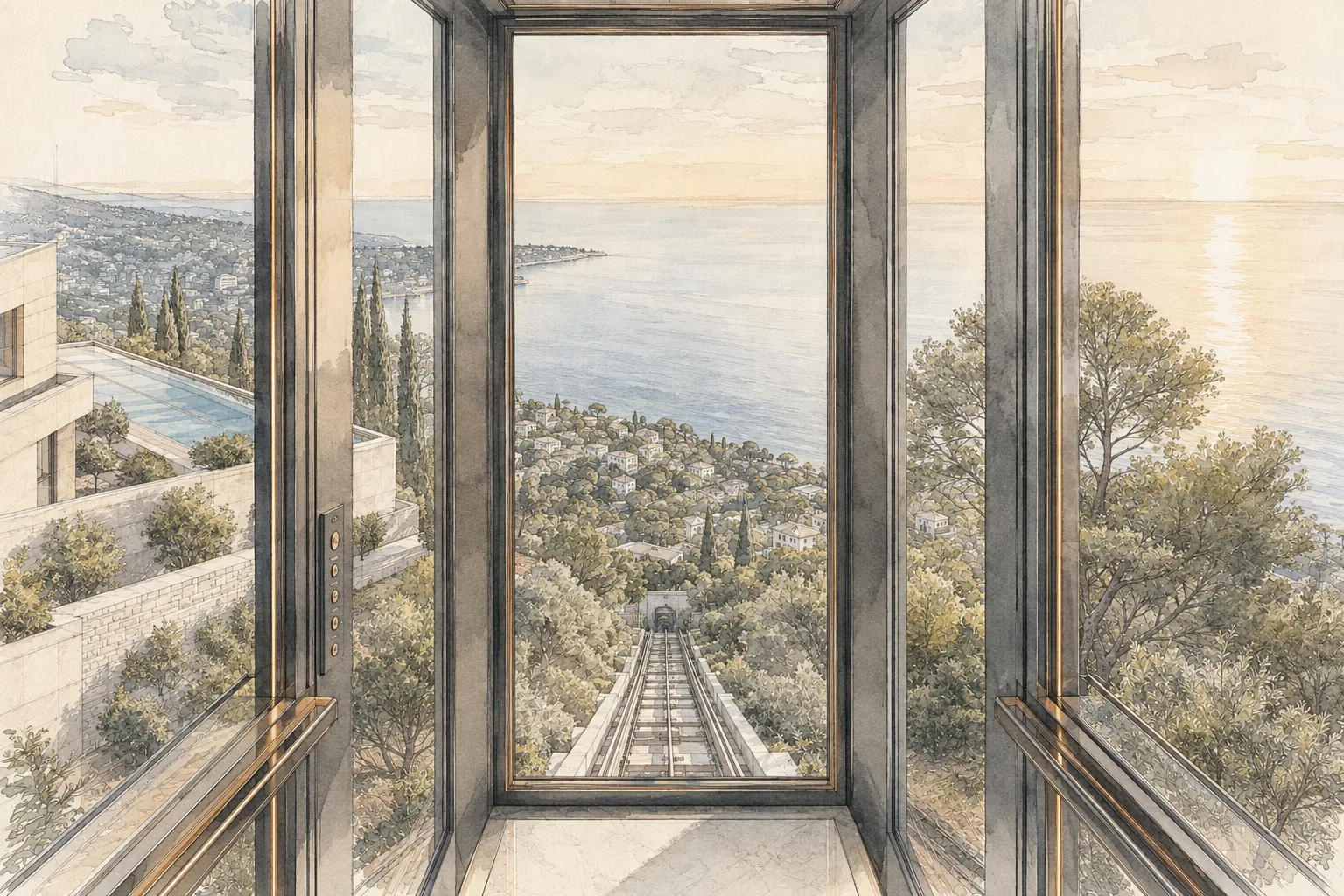
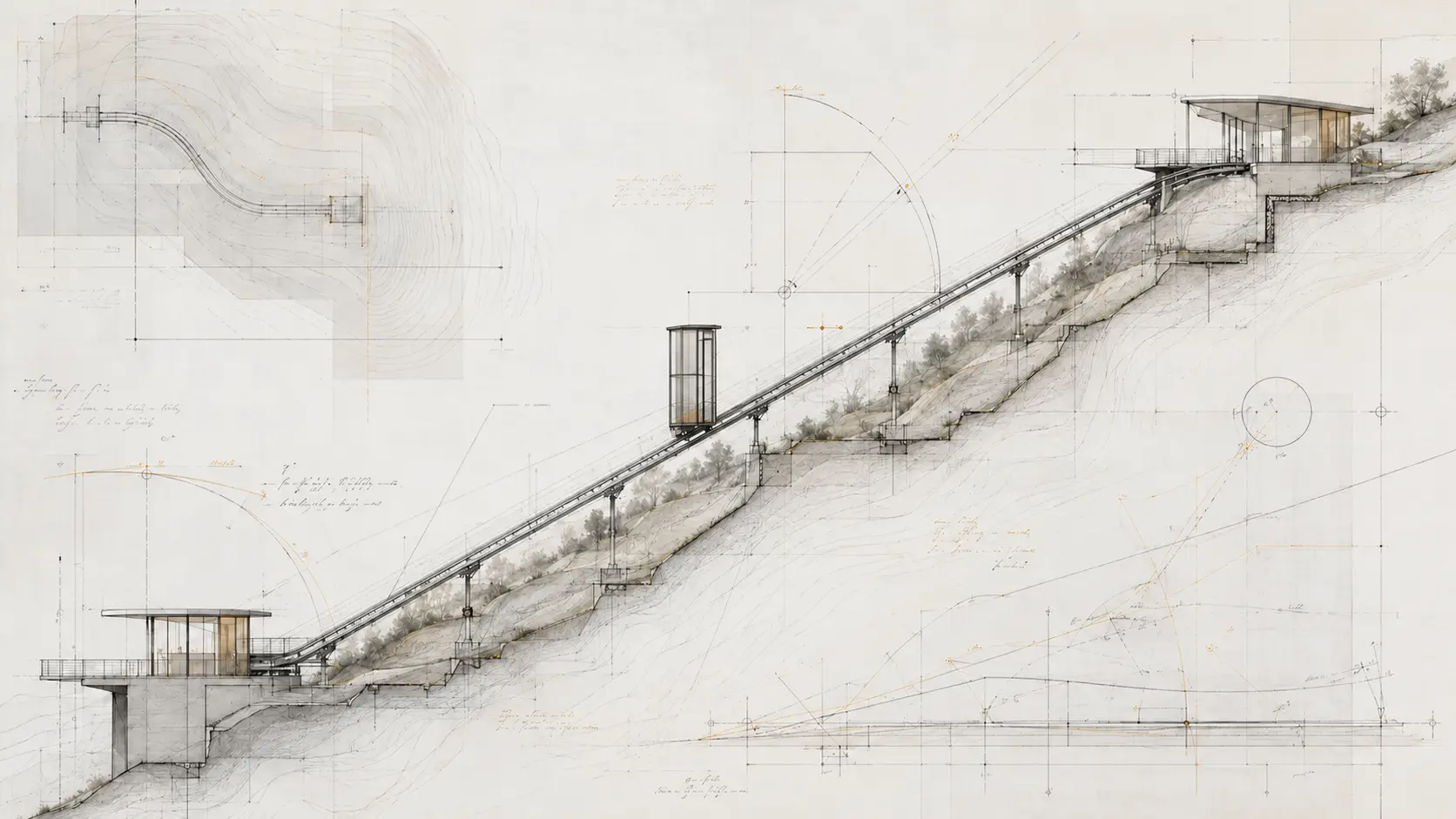
Public clients, designers, elected representatives and local residents need documents that explain the same project. A plan, section, route study and realistic architectural views make interfaces visible. Assumptions are labelled so that early communication does not become an unintended performance promise.
F. Labbé works with the appointed project team on the study, manufacture and installation scope it can confirm. Other contracts cover civil works, urban design, networks and responsibilities assigned by the procurement and project structure.
Treat stations as public places
The station is where a passenger finds, enters and leaves the service. Its approach, threshold, lighting and protection from weather need to work for unfamiliar users. The surrounding path and any waiting area should remain understandable when the site is busy.
Architecture and durability are considered together. Visible metalwork can respond to the local material palette, while doors and protective elements need robust, maintainable details. The public experience begins before the cabin door opens.
Plan continuity of service and maintenance
Inspection access, fault reporting, planned maintenance and closure information belong in the operating concept. If the inclined lift is unavailable, the authority should know how users are informed and what alternative route exists. The exact arrangements depend on the completed project and its operator.
Handover documents must remain accessible to future teams. They record the supplied installation, relevant instructions and responsibilities. This administrative continuity is as important on a public site as the physical durability of the equipment.
Coordinate a realistic international or local delivery
For projects beyond the French Riviera, local surveys, engineering, permitting and contractors are particularly important. Transport, lifting and support after installation must be organised before fabrication decisions close. Clear package boundaries help avoid gaps between the machine and its surrounding works.
A first project note should include location, site plans, anticipated use, procurement timetable and local contacts. F. Labbé can then determine whether the project is compatible with its expertise and which discussions are required before a technical commitment.
Prepare a concise, practical file.
- Site plan, section and public routes
- Available passenger and usage information
- Planning, heritage and urban constraints
- Operating and maintenance expectations
- Procurement programme and local project team
Compare equipment through the route.
A passenger lift travelling along an inclined route, designed for villas, condominiums, hotels and public sites on sloping ground. The page on inclined lift explains the corresponding technical principle.
An exterior inclined lift must be designed around rain, salt air, sun, wind, frost, drainage and long-term maintenance access. The page on outdoor inclined lift explains the corresponding technical principle.
Compare a private funicular, outdoor inclined lift, vertical lift, goods lift and stairlift by starting with the route and its users. The page on hillside access explains the corresponding technical principle.
Questions to resolve before the next design stage.
Does F. Labbé work on public inclined lifts?
F. Labbé has completed public inclined-lift projects and assesses new opportunities according to their technical scope, project structure and location.
What should a public feasibility brief contain?
Include the site, levels, intended service, users, public approaches, operating expectations, known constraints and the project timetable.
Can continuous public opening be promised at concept stage?
No. Opening conditions, availability and operating procedures depend on the designed installation, operator and applicable requirements.
Describe the site before choosing the solution.
A few simple details are enough to understand the journey and prepare a useful first discussion.
Useful first documents
- Photographs from the bottom and top
- Levels to connect and intended use
- Any available plan, section or survey